Collage Film - Remixthebook
- Helen Flaherty

- Jul 15, 2020
- 2 min read
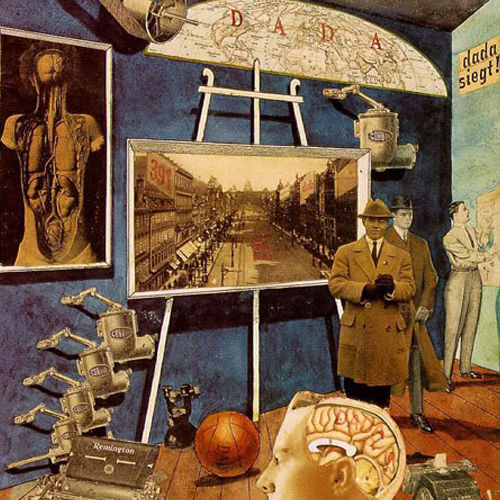
Collage is an assemblage of disparate parts (objects, images, etc.) that together form a new work. Often the power of the work lies in the juxtaposition of the various elements of the collage.
Collage film is a continuation of this process. Film footage that was not necessarily intended to go together is collaged in order to create a new work. The elements used in collage film include found footage, animation, still imagery, news broadcasts, and popular culture. Like most appropriated art, collage film is often intended to reveal then subvert the audience’s preexisting associations with the appropriated film image.
For the remixthebook Course Section, we are focusing our attention on one particular collage film artist, Craig Baldwin. Craig Baldwin was born in Oakland, California and grew up in nearby Sacramento. He received an M.A. from San Francisco State University in 1986 where, in the Cinema Department, he first became interested in collage film as part of his studies under the experimental interdisciplinary artist Bruce Conner. In addition to his notoriety as a “visual artist” working in traditional collage, sculpture, and photography, Conner was a filmmaker whose film, A MOVIE, expertly reassembles old film footage and includes a soundtrack featuring a recording of Ottorini Respighi’s Pines of Rome that, when viewed with the movie, creates an art experience that invites the viewer to meta-reflect on the act of watching a movie.
According to Wikipedia, “Baldwin developed his use of found imagery, he came across the theories of the Situationist International (SI). Baldwin was also exploring art that was occurring outside of the traditional and more socially acceptable forms of high art, such as zines, mail art and altered billboards.” In addition to his clear roots in the SI, Baldwin admittedly owes to the Beat poets as well. He expresses gratitude for the role they played in establishing the youth counterculture of the time as a force situated firmly outside of the mainstream. Acting on what he calls a “cultural response to the middle-class lifestyle,” Baldwin spent some time hitchhiking and hopping freight trains. This nomadic lifestyle, coupled with the ectstatic influence of the Beats, the SI, and other forms of hactivism (see his film Sonic Outlaws, a documentary of the various multimedia collage artists including the band Negativland), Baldwin is the perfect example of an underground remixologist who spins narrative into networked co-conspiracy.
Comments